

I continue to find it inspiring the Buddha offered an exceptional depth and expanse of the teachings of liberation.
He also listed nine ways to communicate the teachings, navaṅga satthusāsana, which means Ninefold Ways to give Dharma teachings.
The Buddha referred to various applications of language to communicate the Dharma. Teachers in any category employing the spoken and written word would benefit from going slowly through each of the nine ways. It might open the doors to reflecting on further ways to communicate teachings, whether offered in the classrom or expressed in articles/books of a social critic.
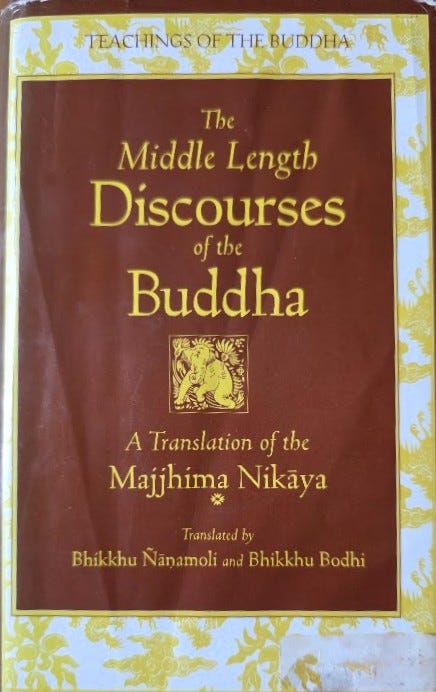
Those who love the discourses (suttas)) can see the relevant passage in the much-loved Simile of the Snake discourse in 22nd sutta of the Middle Length Discourses (the most widely used book of the Buddha’s discourses).
I have a sideways connection with the content of this sutta. I endured a rather severe snake bite of a viper during my years as a monk. It occurred at the edge of a stream one moonlit evening due to forgetting my torch.
The Buddha warned how easy it is to get a snakebite. He stated that misunderstanding his teachings can lead to suffering, just as grasping a snake by its tail. Examples of grasping the snake’s tail refers to using the teachings to feed ego, encourage becoming identified with a teacher or methodology, empire building, manipulation of others, faultfinding and to win arguments.
Wise use of the teachings contributes to wisdom and happiness for one and all.
Nine forms of language for teaching
As a servant of the Dharma, I endeavour to employ all nine forms of language in the teaching. Some ways have more appeal than other ways for practitioners. Other teachers will also apply all nine while others less.
Examples of the Nine Ways.
1. Sutta — Discourses. Daily talk.
2. Geyya — Prose and verse spoken/written and printed out to support Sangha.
3. Veyyākaraṇa — Explanations. This includes instructions, guided meditations and meaning of core Dharma terms.
4. Gāthā — Poems. Spoken or Written. Use of poetic language/poetic communication to communicate an insight.
5. Udāna — Inspirational utterance. In a talk or 1-1. One person or more may hear a few words which go deep, supporting situations in their daily life for years or decades.
6. Itivuttaka — Thus have I heard. No claim to the suttas as absolute truth since suttas rely on memory. Yet the words heard and recorded continue to transform lives for more than 2500 years.
7. Jātaka — Refers to what started in the distant or recent past, yet still relevant.
8. Abbhutadhamma — Something wonderful emerging out of the Dharma – adventurous life, ethics, insights, wisdom, love, compassion, depths of meditation, deep friendhips in the Sangha, an end to suffering and an awakened life.
9. Vedalla — Questions and Answers.
In this discourse (sutta) the Buddha explained (veyyākaraṇa) in a section of the sutta the significance of the five aggregates or five compositions of a human—form, feeling, perception, mental/verbal formations, and consciousness.
He referred to the changeable, unreliable and impermanent features of the dynamics of these dependent arising compositions.
The Buddha pointed to the unselfing of all five as “mine,” “I,” or “myself.” This puts an end to the tyranny of identification with the unreliable and unfixable -without making a conceited claim of possessing a true self.
MN 22 — The Simile of the Viper (SuttaCentral)
May all beings go deep into the teachings
May all beings see the wisdom of expansive use of language
May all beings know the end of the tyranny of grasping.