

On Thursday 25 December, the Christian/consumer world celebrate Christmas Day. Churches will conduct midnight Mass and other services to mark the birth of Jesus in a village in Bethlehem, Palestine. Aged 30, Jesus the Annointed One, started offering profound teachings to Palestinians, secular and religious, the poor and the powerful.
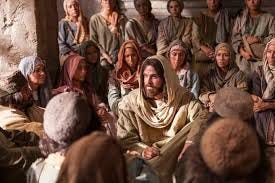
His teachings focussed on wisdom, love and salvation (liberation) in a language often similar to the Buddha. Today, he rarely gets quoted, such as his unwavering teachings on non-violence, love thy neighbour and criticism of abuse of power among religious authorities. Among Christians, The Bible, Church and beliefs of Christian sects often take priority over the teachings of Jesus.
There is a possibility Jesus had first-hand contact with the teachings of the Buddha. We cannot ignore a simple truth – the extraordinary number of parallel statements of the Buddha and Jesus. They are far too close in wording to be a coincidence.
India is the home of the Buddha-Dharma. The influence of the Buddha’s teachings had spread throughout much of India and the Himalays in India at the time of Jesus, 500 years after the death of the Buddha.
If so, then Jesus took much the same caravan route across Asia and into the subcontinent of India and the Himalayas, as many Western seekers did from the mid late 1960’s until the 1990s - the “hippy trail.” Then Russia invaded Afghanistan in 1980, the USA, the UK and their allies replaced them inflicting more immense suffering on the people of Afghanistan and brought a virtual halt to the overland journey from Europe to India, via Aghanistan.
The Western wars on Arab countries this millennnium made it dangerous for Westerners to make the overland journey to India. Relying on exceptional Muslim hospitality, a handful of travellers cycled, by motorbike, bus or coach travelled overland through Turkey, Iran and then from southern Iran crossed over into Pakistan to bypass Afghanistan.
New Testament offers a clue to the initial spiritual influence of Jesus. The first page of the Gospel of Matthew states that three wise men from the East came to Jerusalem to find Jesus. “We saw his star in the East.” The three men brought with them gold (symbol of transcendence), frankincense (symbol of Divinity) and myrrh (embalming oil, symbol of death).
A Kashmir monastery contains a shrine seemingly dedicated to Jesus. Inside the shrine, there are two footprints (a usual form of Buddhist sculpture reserved for a Great Man who has walked on the earth). The two sculptured footprints show two marks, one on the top of each foot. A Roman soldier hammered a heavy nail through the feet of Jesus with one foot on top of the other.
Fourteen Statements of Jesus in the Gospel of Thomas
The Gospels of Mathew, Mark, Luke and John have become the texts that the Church authorised for the use of Christians, Catholic and Protestant.
Found in Nag Hammadi, upper Egypt in 1945, the Gospel of Thomas ,with its 113 Sayings, deserves a place alongside the canonical gospels with Thomas’s text offering a further diverse collection of pithy and profound statements of Jesus, free from the so-called miraculous events of the birth, death and resurrection.
The talks of the Buddha begin with Evam Suttam (Thus have I heard), the texts of Jesus came to be known as the Gospels (Good News). The writers of the texts of the two spiritual revolutionaries make clear that they offer a report of what they heard and understood.
The Church rightly states that the gospel of Thomas came from a man born after the death of Jesus. The tradition of the East supports transcendent and illuminating insights - the words of the annointed one, rather than from Jesus, the person. In the same way, there are discourses of the Buddha, the awakened one, written long after the death of Gautama. Transcendent teachings do not come from the self, with or without a capital s.
A liberated annointed/awakened voice emerges from the Deep.
Jesus and Gautama would surely support such beautiful statements in their name.
Read slowly. If you experience a tiny visceral response to one or two, then commit to memory, to paper, to mobile. Reflect. One profound statement can uncover numerous profound insights.
Saying 1: Right at the beginning of his gospel, Thomas quotes Jesus as saying: “Whoever finds the understanding of these sayings will not taste death (
One will know the Deathless, said the Buddha.
In the gospel of Thomas, Jesus teaches a homeless way of life, a love of solitude, a love of silence, simplicity, a simple diet and encouragement to “fast from the world.” He maintains that the true wealth of life reveals itself in love and happiness rather than possessions and personal success.
Saying 2: He said the searcher should not stop seeking until one has found. “ One will be amazed.
This expresses the impact of finding the Kingdom of Heaven.
Jesus rejected the notion that the kingdom of God is in a faraway heaven after death, nor is it under the earth but equally within you and around you.
“If heaven is in the sky, then the birds will get there first,” he commented – probably with a smile on his face.
Saying 11: “During the days when you ate what is dead, you made it alive.”
A metaphorical reference to resurrection to an awakened life out of the deadness, mundaneity and dullness of an unexamined life.
Saying 14: He emphasised the importance of receiving what is offered. “Whenever you go in the countryside, and wander from place to place, and the people receive you, eat what they serve you.”
The same principle of contentment with the food offered also applies to accommodation, clothes and other basic necessities. Otherwise, we spend an inordinate amount of time swirling around in thoughts, likes and dislikes, distracting us from liberation and love.
Saying 18: Friends of Jesus asked him to tell them about the end of the path, the end of suffering, the world of formations, inner and outer. He replied with a beautiful insight to their inquiry?
“Have you already discovered the beginning so you can seek the end? For where the beginning is, the end will be. Blessed is the one who stands at the beginning that one will know the end and will not taste death.”
The dedicated meditator could spend as much practice as necessary contemplating the incredible truth revealed in this statement until it became abundantly clear - as clear as the hand reveals itself at the end of the arm. Those who know divine of the ultimate truth can reveal such truth.
Sayings 20: Jesus said: “The Kingdom of Heaven is like a mustard seed that grows into a large plant when it is watered and gives shelter to the birds of the sky.”
We may find initially the liberated voice of wisdom, a whisper, as tiny as a mustard seed, but awareness and insights water consciousness until the empowered voice gives support to others.
Saying 22: “You will enter the kingdom when the outer is like the inner and inner is like the outer and when you make male and female into a single one. There is light of an enlightened human being which shines on the whole world.”
When you deeply understand what everything has in common, inner and outer, male and female, you are enlightened. You see without the bias and prejudice of clinging to self-indulgent views.
Saying 27: If you do not fast from the world (of desire, likes, dislikes and fears) you will not find the Kingdom of Heaven (Nirvana).
“The fire of desire has people in chains with the bitter bond of desire for visible things which change and decay.”
This statement refers to impermanence and whose condition and relationship to fluctuate, change and decay.
Saying 28: “I found people drunk but not thirsty.” (
This refers to people lost and confused in self and the material world but not thirsty for truth.
Saying 31: If one blind person leads another blind person, both will fall into a hole.
Spiritual and religious teachers stuck with forms, techniques, beliefs, traditions and identification with spiritual/religious leaders/gurus constitute the blind.
“No one put a light under the basket. Put it on a stand so that others see it.”
Don’t be afraid to speak the voice of wisdom in front of others.
Saying 49: Blessed are those who are alone and chosen, you will find the Kingdom. (The voice of truth moves those away from the mundane world of grasping after pleasure and avoidance of pain. There is willingness to experience aloneness, a solitude enabling a trust in the Deep, in the infinite Kingdom.
Saying 76. On rulers and aristocrats: “They are dressed in rich clothing because they cannot understand truth.”
Those dressed in luxury clothing or are impressed with others with extravagent attire fail to realise the truth that our body and body of others underneath the clothes age and decay day by day. Look at any photograph of our ‘self,’ There is no going back to how you looked five years ago, let alone decades.
Saying 93 “If you have money, do not lend it at interest.
Jesus chased the money merchants out of the synogogue. The Roman governor, Pontius Pilate heard about it. Increase or excess of financial interest and gain is unjustified in Islamic law. Muslims must earn money lawfully, use it in responsible ways, give to charity and donate money to support needs. A wise reminder to Muslims and non-Muslims.
Saying 105: “The Kingdom is like a shepherd who has 100 sheep. He goes to find the sheep that wanders furthest away. He searches until it is found. I love the one more than the 99.”
Wisdom gives priority to the one with the greatest need over the 99 with less need and already receiving the support of the many. Wisdom encourages the one to be close with the Sangha of the wise, of practitioners.
Residence of God
As with the Buddha, Jesus knew the world as much as a psychology as physical phenomena. Liberation, another word for the Kingdom of Heaven, embraces the world of mentality/materiality. Jesus addressed head on social issues and with his exceptional gifts with language, he used incisive terms to make his point. He often turned against the accepted wisdom in order to point towards the Kingdom of God that offered such a different vision of our humanity.
Words of Jesus might well have struck a chord with the Palestinans living under Roman occupation. Others plotted.
He told Pontius Pilate My Kingdom is not of this world with its wars and killing over land, torture and executions, including the crucifixion of Jesus and two thieves hours later.
The Buddha has a similar response in his use of language – Brahma Vihara – Brahma means God and Vihara means Residence or Place to Live. The Buddha said God’s residence consists of immeasurable love, compassion, appreciative joy and equanimity.
Our Kingdom is not of this world.
May we all know the freedom to offer love and gifts,
near and far, to those in need throughout the year.
Thank you to paid subscribers. You do not receive any extra blogs, personal emails or anything else for your kindness. You gift is appreciated. It stays as a gift since you received nothing in return. This point has a 3000 year-old tradition connected to it.
Love
Christopher
PS. I am currently completing a book, The Resolution of Suffering. Ready for publication in the early months of 2026. One chapter contains 60 parallel quotes of Jesus and Gautama.
Dear Tammy,
Thank you for your message. I followed the conventions in Substack Post on Jesus.
Jesus was born in Bethlehem, Palestine - as agreed by most UN nations.
If Jesus was born in say Afula, a town near Ein dor with its Buddhist centre, I would have written Jesus was an Israeli.
Neither Palestine nor Israel existed 2000 years ago. Both are products of the 20th century.
The Buddha was born in India even though the name 'India' was not used for this vast country until the end of colonialism in the 20th century.
Happy new year.
Love
Christopher
Hello dear Christopher. I'm being super gentle here but wanting to point how the mind of most people works. The idiom 'Jesus was a Jew' used to be w thing. Now a days whether Jew in diaspora or not is really not a cool brew. Now, your post is it course true - if Jesus was from Bethlehem or Hebron or Nazareth he would of course be - post British occupation or whenever the precise delineation by patriarchs labelling pieces of land as owned territories - a Palestinian. But to the commonly educated person who when you say Jesus is was Palestinian you miss the option that it is immediately assumed Muslim. Not that you should really care, but I personally feel you are potentially adding fuel to a really inflamed fire which adds more soldiying to positions, opinions and ideologies. Happy to hear a clarification about your thoughts. Tammy