

Talk transcribed edited and adapted with extra points for the written version. Dharma teaching given at the precious Waldhaus Buddhist retreat Zentrum, Andernach, near Koblenz in Germany.
Living in this world, which human beings have configured so extensively, brings a curious reversal to mind. In the evolutionary process, we have been told, energy, matter and countless formations eventually gave rise to consciousness. I’m not concerned here with defending that view. What matters now concerns the reverse movement.
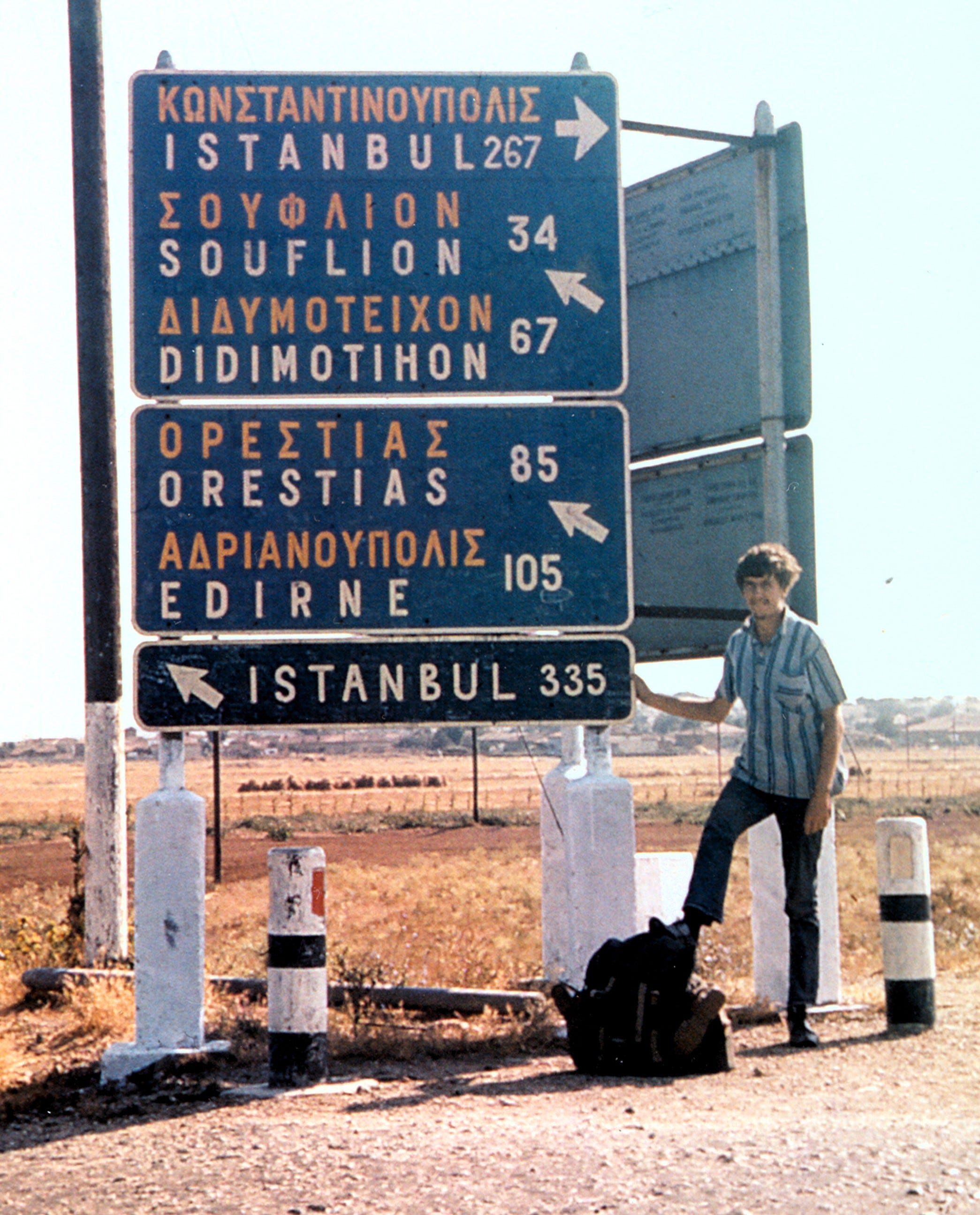
July 1967. Greece. Hitchiking to Istanbul. 335 kilometres further on. Life on the road.
Consciousness — you and me, human beings — has acquired an extraordinary capacity to affect the material world: nature, other creatures and other human beings in caring, curious and violent ways.
Once regarded as an outcome of the process, consciousness of humanity has become one of its primary influences. That calls upon us to change. Without change, consequences follow from our disregard for life and the natural world.
Yet even amid all this, joy — one of the beautiful experiences of life — can genuinely emerge. It needs recognition and appreciation. Joy, one of life’s flowers, grows when something within the being receives nourishment, water and care. When joy comes, let it flow.
Sometimes people ask, ‘How can anyone be happy in this world?’
What? Turn our backs on happiness?
Quite the opposite. How could anybody live well without it? Human beings need the nourishment of happiness, joyfulness, friendship, love, passion, connectedness, humour and lightness. If we turn our backs on these qualities, life becomes impoverished.
Bring beauty into Being
Finding caring and loving ways to bring beauty into life — poetry, art, creativity, service — contributes enormously to living with love amid change in the unfolding of existence. Through such offerings, we offer something beautiful to the world.
That raises profound questions:
What beautiful offering can I give to life?
In what ways can our offer show itself?
What am I prepared to give up to help make that happen?
What kind of service might make it possible?
What care and compassion can I give to others?
Such questions open up our world. Let us encourage exploration alone and with others and invite something fresh.
More and more of what people value today did not originate within our own culture. European civilisation — a rather conceited term — did not discover everything within Europe. People looked beyond their small world, knowing the finite expressions of Western society.
‘What do those living outside the West know? What have they preserved that has real value?
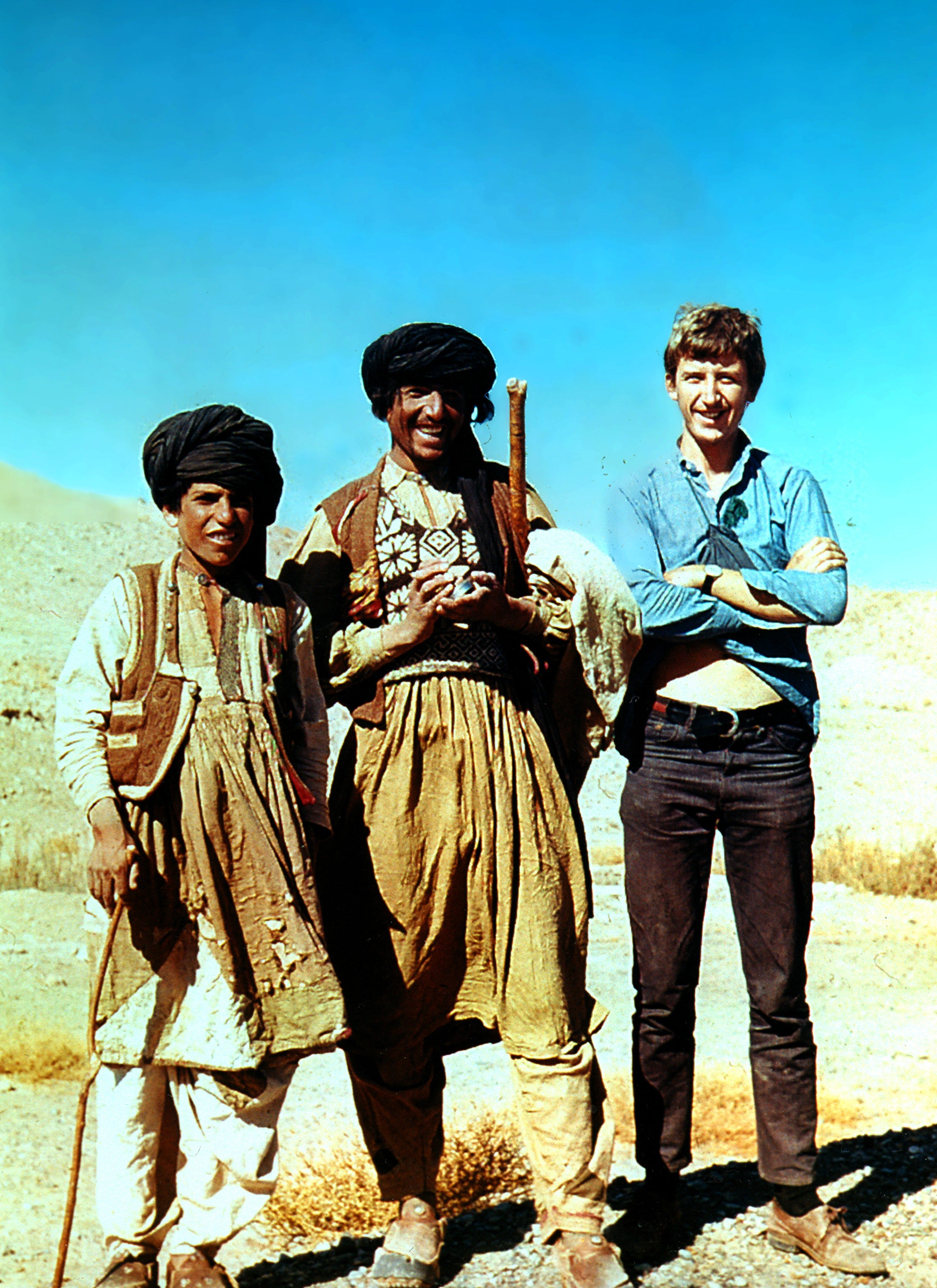
October 1967, With camel herdsmen in the desert of Afghanistan
Maybe something there speaks directly to our experience or inexperience.’
Whoa.
Outside the box
Looking outside the box brings greater freedom: the freedom to recognise what genuinely has value inside the box without imagining that the box defines the limits of existence. Human beings have their groups, networks, families, jobs and cultures. Why imagine such finite structures could contain the greatest possibilities of human experience?
One thing matters: knowing the Infinite. Everything else risks becoming compromised, a state of forgetfulness, a confinement to the finite.
Sometimes joy reminds us of the Infinite. Nature reminds us. Insights reminds us. Sitting on the bus reminds us.
Fresh, unusual, creative, quirky — even apparently crazy or stupid — actions can remind us too.
Sometimes I say to young people: if you want to do something odd, eccentric, out of the ordinary, and your parents tell you, ‘No, no, you shouldn’t do that,’ perhaps you should look carefully at what calls you. Do you want to live the same life as your parents?
Parents might want the best for their children. My parents certainly wanted the best for me. I sincerely believe that.
By the age of 22, I had hitchhiked twice Europe and then came the wish hitchhike to India. My mother’s response still makes me smile.
‘You’re 22 years of age. You’re far too old to go hitchhiking.’
She tried every strategy. ‘You’re giving up a really good job. You could become editor of the Daily Express.’
That job would have been my worst nightmare.
Life is spent on’ the road.’ Remember this when you walk to your local shops with a shopping bag or carry a backpack to another destination.
Their idea of the best did not offer the life I needed to explore. Sometimes a young person looks at the life presented by their parents and current generation and thinks, perhaps with some affection, ‘If that’s what you’ve got to offer, get me out of here.”
So you initiate another exploration.
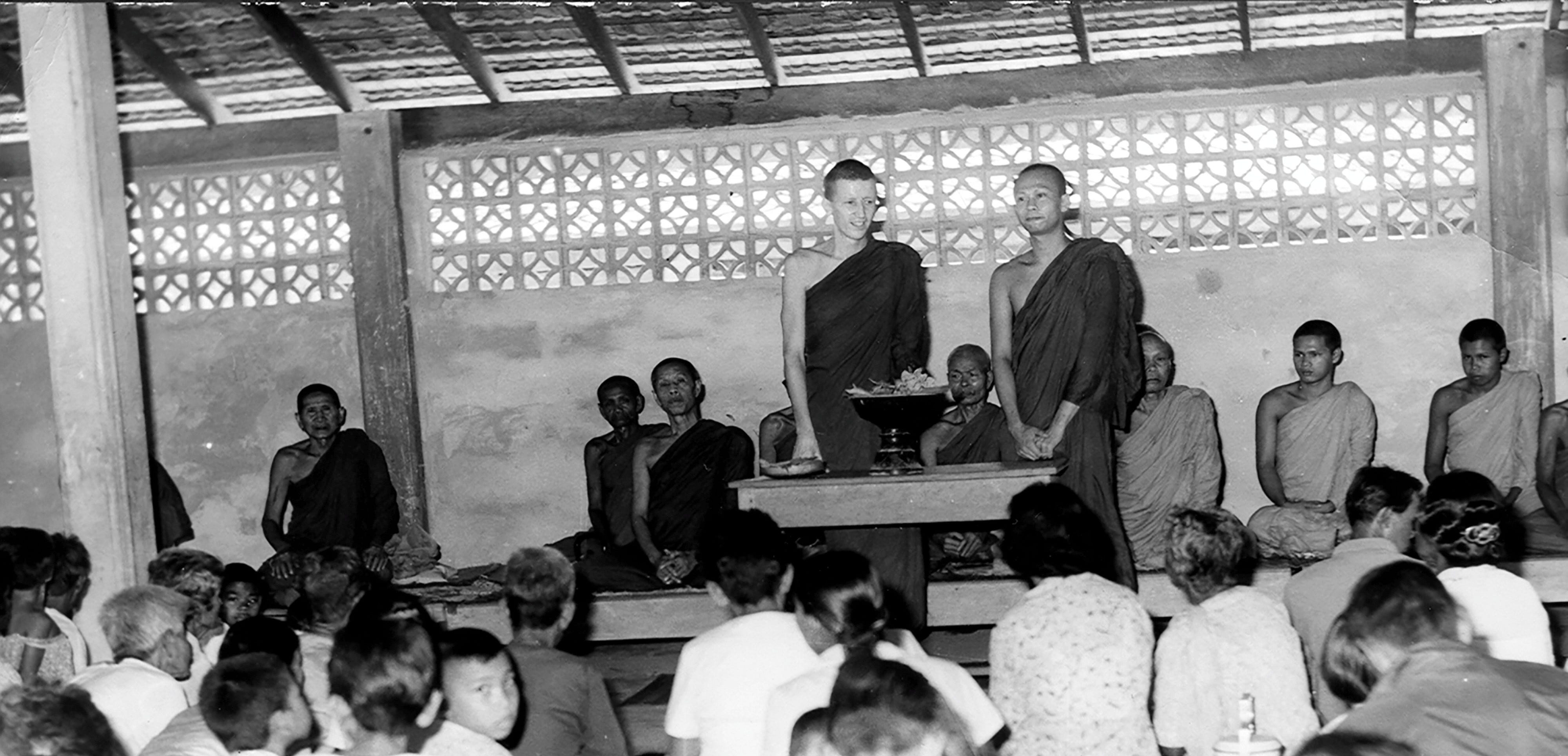
Giving my first Dharma talk in a village near Nakornsridhammaraj (it means City of the Kings of Dharma), 16 hours on the train south of Bangkok. Sentence by sentence translation with support of translator. Sitting to my right, just behind me is Ven. Ajahn Dhammadharo, my Vipassana, Insight Meditation teacher).
Life moves dynamically. Sometimes doing something out of the ordinary — something that puzzles or confuses other people — brings forth something remarkable. Keep your eyes and ears open for such possibilities. What might you bring into life that could encourage others as well?
Where does your thought lead you now?
What feels creative and imaginative now?
Where lies the adventure?
Nothing needs to appear big or grand. Something small, new, fresh and different can reveal possibilities beyond the familiar, beyond the finite.
In the Dharma world, the language of process, change, unfolding, dependent arising, conditionality gets used a great deal. It helps communicate the dynamic activity, large and small, continually revealing itself through the field of life.
Stepping out in fresh ways supports that movement: we experience something we have not experienced before, we say with love that we have not said before; write something not previously written and engage in bold initiatives. Such acts can keep us close to the infinite. We feel alive and awake.
Thus, the years pass.
Process of ageing asks for another kind of openness. Certain changes need allowing, recognising and, perhaps, surrendering to as life unfolds. Without a larger view, without risks, confinement can make ageing difficult. Pain may arrive and refuse to go away easily. Death may whisper, or even shout, from close at hand.
If life has centred upon perpetuating security for the self — its survival, continuity, possessions and identity — death will naturally appear threatening. From that viewpoint, death means the extinction of ‘I’, the cessation of everything constructed around me and mine. It looks like an absolute cutting off.
I have nothing in mind here about life after death. I’m speaking about existence itself and our relationship to it.
Vision expands
Suppose, instead, the vision expands. Life no longer revolves around ‘me and my life’, ‘me and what I have’, ‘me and what I’m going to lose, in due time’. The larger process then has room to unfold. We have nothing to gain and nothing to lose. It’s a myth keeping us in the finite.
Life and death complement each other. Their movement takes place every day: beginnings, middle and endings; presences and absences; coming and going. Everything touched, owned and perceived participates in change.
Our existence forms one more expression of beginning, middle and end. Let us not regard being or not being in the process as such a big deal. The self makes it a big deal through all the layers of importance gathered around ‘I’, ‘me’ and ‘mine’. The Dharma invites an expansion beyond those layers to reveal everything that goes on as expressions of the infinite.
With that expansion, we come an understanding of what the teachings call the Immeasurable, the Infinite, along with an appreciation and joy. Such a view has room for all the formations, changes and presentations that life brings.
Let’s have a few quiet minutes together.
May all beings explore this unfolding life.
May all beings sense the multiplicity of its presentations, day by day.
May all beings stay awake.
Thank you.
www.mindfulnesstrainingcourse.org