

A Call to Humanity
Short Intro
As of 30 October 2026, over 100 of the world’s 205 countries support wars through armed conflict, weapons supplies, military training, military finance or military equipment. The latest available Uppsala Conflict Data recorded armed-conflict in 44 countries, around one in five countries, during the period from 30 August to 30 September 2026.
When humanity suffers, we have a moral duty to respond. Expressions of concern do not fulfil that duty. Silence does not discharge it. The suffering of citizens, of families of Palestine, Ukraine, Russia, Sudan, and many other countries demand more than our attention: it demands our refusal to accept the callous disregard for life, whether civilians or military personnal.
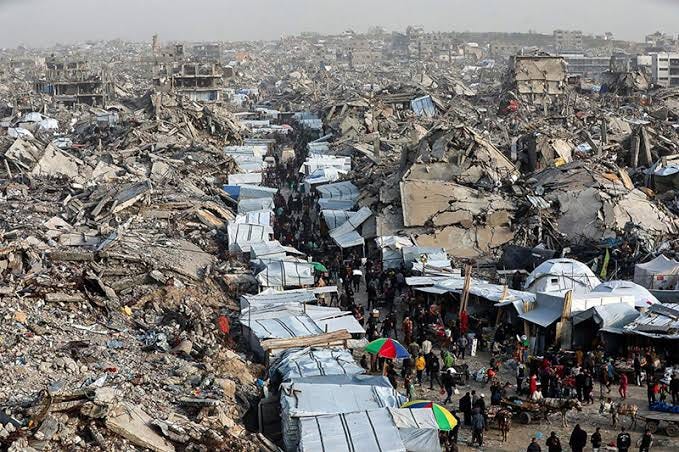
The horror and daily grief of Gaza. Their resilience expresses humanity.
The Lancet Global Health issued a report: Since 1970, US, EU and UK engineered deprivation (cutting of foreign aid, imposing sanctions) brought about 8 million deaths worldwide. The cutting of 80% of US foreign aid since January 2025 could lead to 14 million deaths, including five million children, in the next six years.
A Call to Humanity. A 150 word summary. 2 mins. Text below following full text.
Text of A Call to Humanity
When sections of humanity endure suffering, silence fills the consciousness of the comfortable.
Historians write after the suffering. Conscience speaks up while it is happening.
When sections of humanity ignore suffering, silence turns its back on the truth.
A great danger includes not only that human beings suffer, but that the rest of humanity grows accustomed to it.
How much suffering must the world witness before compassion becomes a responsibility?
When the extraordinary becomes ordinary, something within our humanity gets lost.
Future generations will ask questions. By then, it is too late.
A dangerous moment arises when the world stops being shocked
We witness the suffering of children, countless orphans, grief of parents, loved ones and the devastation of entire communities.
Yet the suffering continues without us raising a little finger.
• We work. We shop. We stare into the mobile. We eat. We chat. We sleep.
• Tomorrow, we do it all again.
Indifference does not always announce itself in a callous attitude
Sometimes indifference disguises itself as a busy life.
May we refuse to become comfortable with what should disturb us.
The world does not lose its humanity all at once. It loses it whenever mass suffering becomes easier to ignore than to face.
Years later, our conscience remembers we failed to respond. By then, it is too late.
We often look back upon the failures of others in the past
• How could they have allowed such suffering?
• How could they have remained silent?
• What did people know?
• What did they believe?
• What did they do?
• How could people have continued their lives while extraordinary injustice unfolded.
• How did so many carry on as though nothing extraordinary was happening?
A haunting question for future generations “Why did they do nothing?”
A direct answer, “Probably for the same reasons you will do nothing.”
We have never been so well informed about human suffering
Information alone has never guaranteed human compassion
Instead, we opt out. We believe responsibility belongs somewhere else. Moral questions remain in the minds of the deluded.
• With governments.
• With leaders.
• With institutions.
• With the media and AI
The influence of self-deception shows itself in the belief
• That reading about conflict leads to action
• That sympathy leads to responsibility.
• That feeling sad leads to making a difference to those suffering.
What does this say about the ‘civilisation’ we built that marginalises compassion.
The danger of sleepwalking through existence
• We drown in information, yet too often starve of reflection.
• We claim connection to the world, while disconnected from its suffering.
• We mistake having opinions for having principles.
• We lack the courage to question the indefensible.
And so life continues. Silence bites the lip as we become afraid to speak up because of fear of disapproval, of being rejected or shouted down.
The familiar routines co-exist alongside endless distractions.
A life that never questions its own indifference risks becoming an existence without moral direction.
When the unacceptable becomes familiar, our humanity is already in danger
What is the value of our humanity if it remains undisturbed by the destruction of people?
We speak of dignity, human rights, justice and freedom
This is the familiar vocabulary of so-called enlightened societies.
Human rights exist in the applications of them, not in politically convenient declarations of support for human rights while supporting war and preparing for war.
Compassion that never challenges abhorrent political views risks confirming our submission to the violent policies of the nation state or organisation.
We condemn the moral failures of the dead; bur barely confront the moral failures of the living.
The language that puts conscience to sleep
There is another danger. It lies in the language we use to describe human suffering.
The language of official concern reveals in:
• Carefully ‘balanced’ statements stating next to nothing.
• Solemn declarations of intent until a challenge comes.
• Endless expressions of regret while carrying on as usual.
When language loses its moral urgency, suffering becomes easier to live with rather than a test of integrity.
The normalisation of the unacceptable
The unacceptable rarely becomes acceptable through a single decision. More often, it becomes acceptable through repetition, trivia in the mind and the gradual surrender of moral authority.
• What once shocked us begins to trouble us less.
• What troubled us becomes familiar.
• What becomes familiar disappears into the background of everyday existence.
And repetitive life continues.
This is how the extraordinary depth of suffering of others can become the ordinary background to our own comfortable lives.
We remain convinced of our own humanity while becoming increasingly detached from the humanity of others.
The powerful preach human dignity only when regarded as convenient. Dignity reveals a principle that becomes meaningless when selectively applied.
We have questions to ask ourselves and each other.
• What have we become accustomed to?
• What have we stopped questioning?
• What suffering have we learned to accommodate within the ordinary routines of our lives?
Has our ability to continue in the same old routine become more important than our willingness to show compassion to others, near and far?
When sections of humanity suffer, silence turns its back on the truth.
When suffering becomes familiar, conscience goes to sleep.
When conscience sleeps, the unacceptable no longer needs to justify itself.
Are we sleepwalking through existence?
A Call to Humanity confirms one important area to express our humanity.
Compassion without limits confirms our humanity.
Find ways to reveal your compassion.
A Call to Humanity (150 word summary)
What happens to our humanity when suffering no longer disturbs us?
We stroll out of reach of shattered lives.
We hold onto our routines.
We tell ourselves responsibility belongs to governments.
It does not.
Silence does not fulfil our moral duty.
Sympathy does not replace action.
A busy life does not cancel responsibility.
We cannot condemn yesterday’s atrocities while excusing today’s cruelty and perpetuation of mass killing.
We cannot defend human dignity for some and deny it to others.
Let us refuse to normalise the unacceptable.
We do not preserve our humanity for some at the expense of others.
Question authority.
Hold to account those who inflict suffering.
Act to end wars.
Speak up for those who face injustice.
Act through non-violent, persistent means.
Historians write after the suffering. Conscience speaks while it is happening.
Human lives matter more than our excuses.
A Call to Humanity confirms one important area to express our humanity.
Compassion without limits confirms our humanity.
Find ways to reveal your compassion.